Updated information on traffic restrictions at Fântâna Miorița, Gara Băneasa, on the Șoseaua București – Ploiești

For execution activities under the contract “Bucharest International Airport Rail Access Link Project (Metro Line 6. 1 Mai-Otopeni). Design and Build – Civil Works for Lot 1.1: 1Mai-Tokyo”, METROREX announces changes to traffic restrictions in the Fântâna Miorița, Gara Băneasa, Șoseaua București – Ploiești area, on the alignment of the future M6 Metro Line, SOUTH Section.

The restrictions will be enforced on Saturday, August 9, 2025, by night, starting with 11 p.m., in the presence of the Traffic Police.

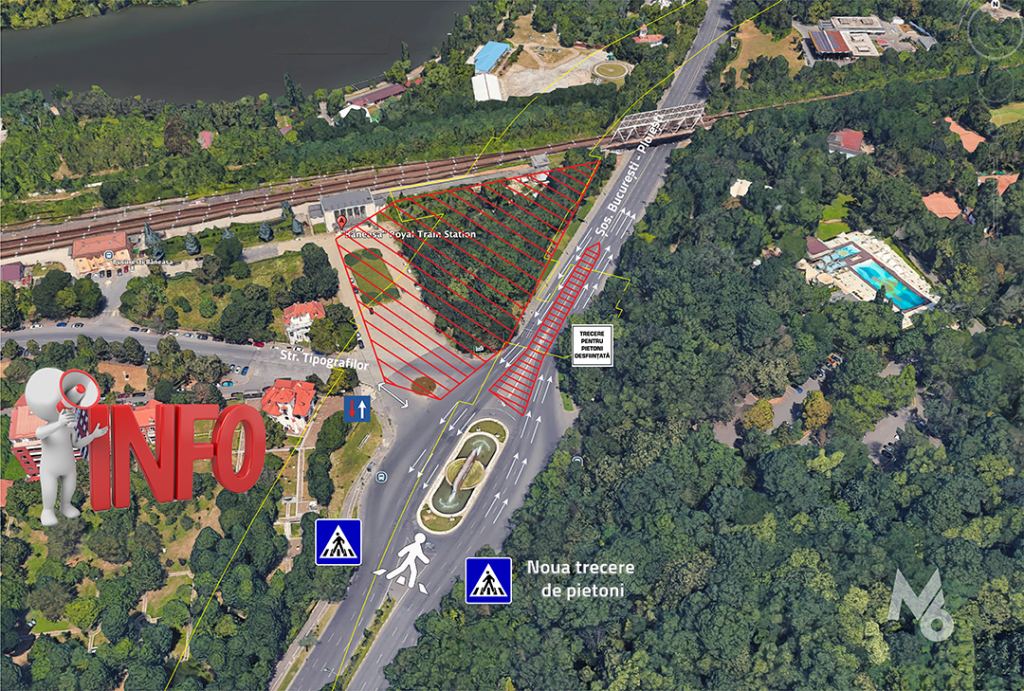
According to the renewed Traffic Opinion, based on the Traffic Plan approved as part of the works for M6 Metro Line, SOUTH Section, until 01.09.2025, there will be changes in traffic flow in the above-mentioned area due to construction activities required by the fourth stage of works for the future “Gara Băneasa” metro station.

The work will be carried out by occupying traffic lanes I and II in the direction of Piața Presei Libere.

The traffic on the Șoseaua București-Ploiești, in the Fântâna Miorița area, will be restricted to two lanes in each direction, which will be appropriately marked and signalized.

Traffic to and from Tipografilor Street will be restricted to one lane.

Metrorex would like to thank all traffic participants on the above-mentioned route for their understanding, as well as residents and companies operating in the vicinity of the worksites.

M6 Metro Line will provide a direct connection from Gara de Nord to Henri Coandă International Airport. Covering a distance of 14.2 km, it will include 12 metro stations: Pajura, Expoziției, Piața Montreal, Gara Băneasa, Aeroport Băneasa, Tokyo, Washington, Paris, Bruxelles, Otopeni, Ion I. C. Brătianu, Aeroport Otopeni.

“Bucharest International Airport Rail Access Link Project (Metro Line 6. 1 Mai – Otopeni)” is a public utility project of national interest, according to Government Decision No. 496/2017, with subsequent amendments and additions, which ensures the mobility needs of people through the development of the trans-European transport network.

Today’s specialists meet tomorrow’s ones

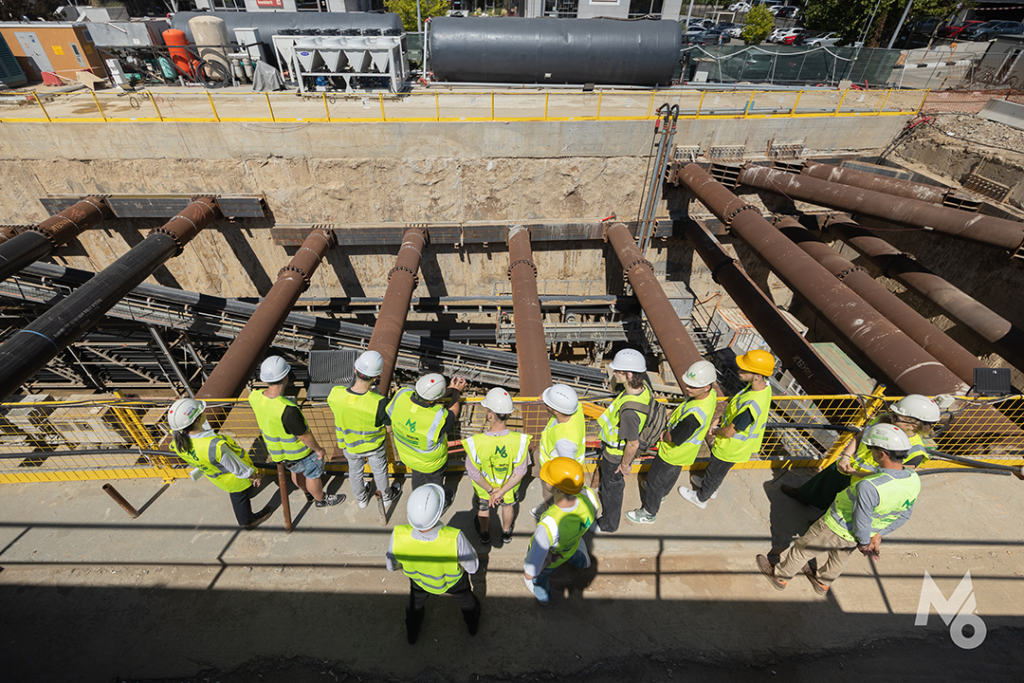
The future Tokyo metro station, part of the SOUTH section of the future M6 Metro Line, has been visited again by another group of students from the Technical University of Civil Engineering Bucharest, accompanied by their professors.

The visit has had an academic purpose, as part of the practical activities included in the universitary curriculum.

The specialists at the construction site presented the ongoing works to the students and provided on-site explanations about the technologies used.

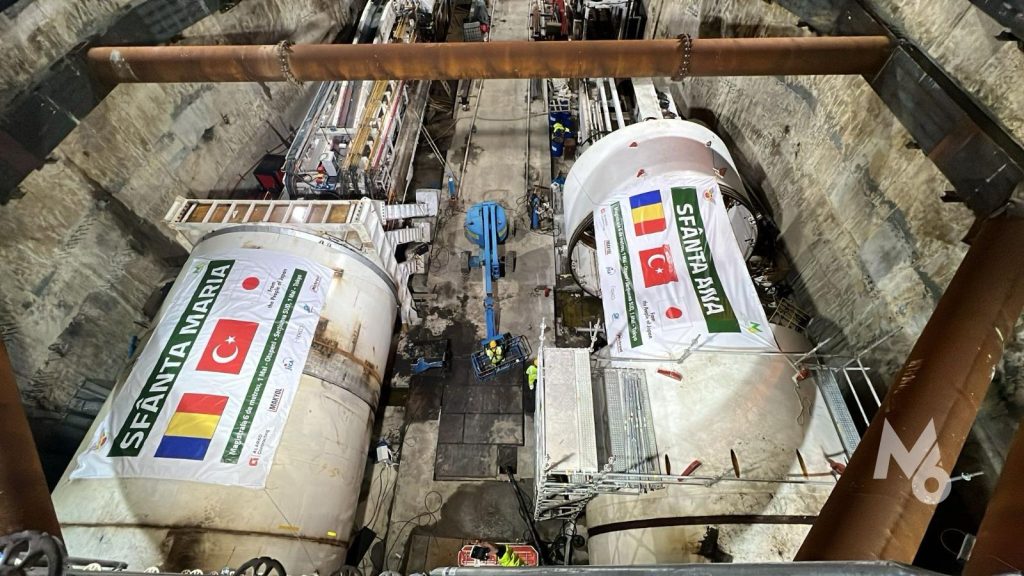
The technical visit has also included access to the two tunnels where the two TBMs, “Sfânta Maria” and “Sfânta Ana,” are operating.

The students’ questions have been answered directly by the technical staff at the construction site, and the meeting has given the specialists building the metro the opportunity to supplement the information that the professors have conveyed to the students during this technical visit.

We are pleased with the genuine and constant interest shown by technical university students in the construction site of M6 Metro Line, and we find that these visits always demonstrate the utmost interest on the part of the students, who are the future specialists in construction.

INFORMATION FOR GARA BĂNEASA-FÂNTÂNA MIORIȚA AREA

The Contractor appointed for the design and build of the resistance structure, galleries and tunnels for the South Section of the future M6 Metro Line has reported that in the area of Gara Băneasa – Fântâna Miorița, on lane 1 of the Bucharest – Otopeni direction, the roadway has been damaged on a small portion. Although the situation is caused by the high temperatures of the last few days, it will be quickly repaired by the staff working at the nearby construction site of the future Gara Băneasa metro station on the M6 Metro Line alignment.

We thank all traffic participants for their understanding!

M6 Metro Line will provide a direct connection between Gara de Nord to Otopeni International Airport. On a route of 14,2 km it will include 12 metro stations: Pajura, Expoziției, Piața Montreal, Gara Băneasa, Aeroport Băneasa, Tokyo, Washington, Paris, Bruxelles, Otopeni, Ion I. C. Brătianu, Aeroport Otopeni.

Bucharest International Airport Rail Access Link Project (Metro Line 6. 1 Mai – Otopeni) is a project of public utility, of national interest, according to Government Decision no. 496/2017, with subsequent amendments and additions, which ensures the mobility needs of people through the development of the Trans-European Transport Network.

Today’s students, tomorrow’s specialists in technical dialog on M6

Students attending the undergraduate program, second year, at the Faculty of Railways, Roads and Bridges – UTCB participated, as part of their internship, in a technical visit on the construction site of the future M6 Metro Line.

The students visited the future metro station Tokyo, on the SOUTH Section (from where the two TBM machines “Sfânta Maria” and “Sfânta Ana” started the tunneling works to the 1 Mai station) and the future metro station Ion I. C. Brătianu, on the NORTH Section.

On this occasion, the young people could witness the various stages of execution currently underway in the two work zones and received detailed information about the technical processes from the specialists on site.

The meeting was productive and interactive, the students got answers to many questions and were impressed by the complexity of the work and the deployment of human and technical resources.

Metrorex is open to dialog with the academic technical environment, taking into account the fact that the training of these young people must constantly combine theoretical study and practical experience.

Updated information on traffic restrictions at Fântâna Miorița, Gara Băneasa, on Șoseaua București – Ploiești

For execution activities in the framework of the contract “Bucharest International Airport Rail Access Link Project (Metro Line 6. 1 Mai-Otopeni). Design and Build – Civil Works for Lot 1.1: 1Mai-Tokyo”, METROREX announces changes in traffic restrictions in the area of Fântâna Miorița, Gara Băneasa, Șoseaua București – Ploiești, on the alignment of the future M6 Metro Line, SOUTH Section.

The restrictions implementation will be made on the night of June 30 – July 1, 2025.

According to the renewed Traffic Opinion, based on the Traffic Plan approved as part of the works for the M6 Metro Line, SOUTH Section, until 17.07.2025 there will be changes in the traffic flow in the above mentioned area, for site activities required by a new stage of works for the future metro station “Gara Băneasa”. As a consequence, the work will be carried out by occupying one traffic lane in each direction (lane III in both directions).

Road traffic will follow two lanes properly marked and signalized on the Șoseaua București – Ploiești, in the area of Fântâna Miorița.

Traffic to and from Tipografilor Street will flow on one lane.

Metrorex thanks all traffic participants on the above-mentioned route for their understanding, as well as residents and companies operating in the vicinity of the work area.

M6 Metro Line will provide a direct connection between Gara de Nord to Otopeni International Airport. It will have a route of 14,2 km and will include 12 metro stations: Pajura, Expoziției, Piața Montreal, Gara Băneasa, Aeroport Băneasa, Tokyo, Washington, Paris, Bruxelles, Otopeni, Ion I. C. Brătianu, Aeroport Otopeni.

Bucharest International Airport Rail Access Link Project (Metro Line 6. 1 Mai – Otopeni) is a project of public utility, of national interest, according to Government Decision no. 496/2017, with subsequent amendments and additions, which ensures the mobility needs of people through the development of the Trans-European Transport Network.

Effective Dialogue within the Romania – Japan Strategic Partnership

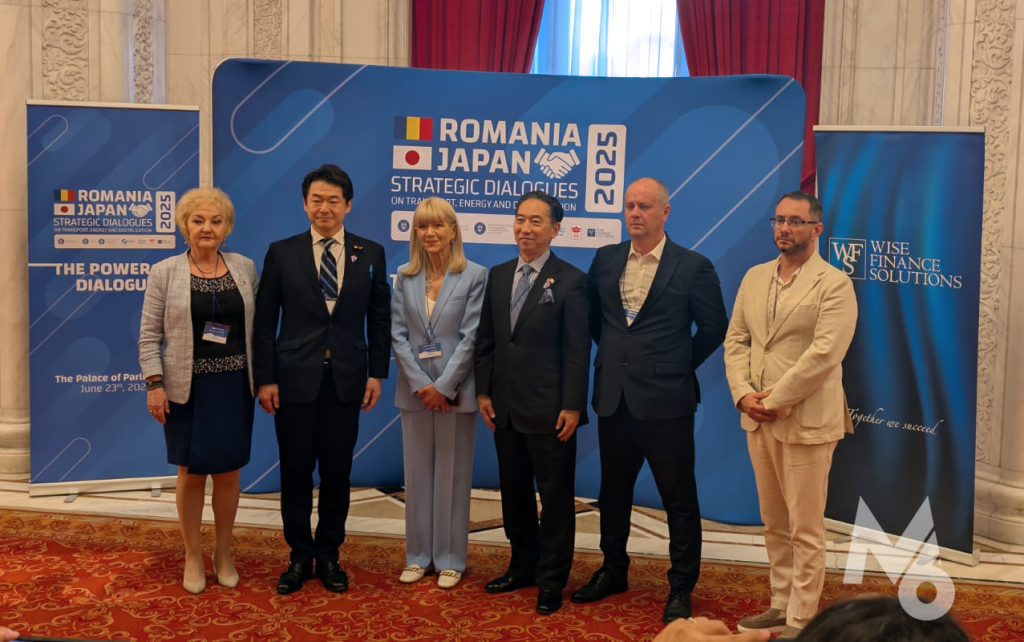
On 23.06.2025, at the Parliament Palace, the strategic document of cooperation in the field of Transport, Energy and Digitalization was signed, between the Government of Japan, represented by His Excellency Mr. Akiyoshi KATO – Vice Minister of Economy, Trade and Industry of Japan and the Government of Romania, represented by Mrs. Mariana IONIȚĂ – Secretary General at the Ministry of Transport and Infrastructure.

During the signing ceremony of the strategic document, which took place at the Palace of the Parliament, the parties involved presented their own strategies in the field of Transport, Energy and Digitalization, the projects currently being implemented, as well as future strategic projects that will lead to sustainable development in the above-mentioned strategic areas.

The General Director of Metrorex, Mariana Miclăuș, took part in the dialog on the occasion of this event together with H.E. Takashi KATAE – Ambassador of Japan in Romania.

After the signing ceremony of the strategic document on cooperation in the field of Transport, Energy and Digitalization, the Japanese delegation made a series of thematic working visits, including to the future M6 Metro Line, financed from the Romanian state budget, through the Ministry of Transport and Infrastructure and reimbursable external funds, through the National Recovery and Resilience Program (PNRR) and the ROM-P5 Loan Agreement granted by JICA (Japan International Cooperation Agency).

Japanese officials, members of the Japanese Parliament and representatives of some Japanese companies in the region visited the future metro stations Aeroport Băneasa, SOUTH section and Aeroport Otopeni, NORTH section of the future M6 Metro Line. The visit was hosted by the Ministry of Transport and Infrastructure, by the General Director of Metrorex, Mrs. Mariana Miclăuș, by representatives of the contractors involved in the realization of the two sections of the project: Lot 1.1, ALSIM ALARKO – MAKYOL Joint Venture (SOUTH Section, 1 Mai -Tokyo), and Lot 1.2, GULERMAK – SOMET Joint Venture (NORTH Section, Tokyo-Aeroport Otopeni), as well as the project’s Supervisor, PADECO Co., Ltd. – ORIENTAL CONSULTANTS GLOBAL Co., Ltd. – METROUL S.A. Joint venture.

The airports are open gates to the world, so both objectives visited are representative for the local, regional and international character of the future M6 Metro Line, but also for the strategic partnership between Romania and Japan.

Locally, the future M6 Metro Line will increase the mobility of the population of the Bucharest metropolitan area and the city of Otopeni, regionally it integrates regional air, rail and road transport flows, being the first direct rapid link between Gara de Nord and Otopeni Airport, and internationally it represents a main intermodal connection hub in the trans-European transport network designed to meet the EU objectives in terms of sustainable mobility.

We thank our Japanese partners for their continued support for the development of metro infrastructure!

METROREX welcomes future specialists

Metrorex and the contractors of the new metro line consider collaborations with academic community extremely important.
The information that students acquire at university is the basis of their training as future specialists, but the essence of the construction profession is par excellence a concrete, applied one, based on good practice and the judicious application of theoretical knowledge.

Metrorex and the Alsim Alarko – Makyol Joint Venture, the Contractor appointed for the design and build of the resistance structure, galleries and tunnels for the SOUTH Section of the future M6 Metro Line 6, 1 Mai – Tokyo, hosted a visit of students from the Faculty of Geology and Geophysics of the University of Bucharest.

Students attending the second and third year of the undergraduate program, accompanied by professors, received relevant information from the Constructor’s specialists at two of the construction sites of the SOUTH Section: the future Tokyo metro station, where the two TBM machines, “Sfânta Maria” and “Sfânta Ana”, are operational, and the future Gara Băneasa metro station.

„Sfânta ANA” TBM AT START!

The second operational TBM machine on the South Section of M6 Metro Line goes into action.It also runs from the future Tokyo metro station to 1 Mai, excavating the second tunnel on the SOUTH Section.

Being named “Sfânta Ana”, an emblematic spiritual symbol, the TBM that will dig the twin tunnel that the TBM “Sfânta Maria” is drilling, is 105 meters long, weighs about 600 tons, and its cutter head is about 6.60 meters in diameter.

The TBM’s average forward speed is 1.5m per hour, excavating about 60 cubic meters of soil.
As it excavates and removes the excavated soil, the TBM mounts the tunnel rings. The tunnel rings are transported by MSV (Multi Service Vehicle), a special transport vehicle that can carry up to 50 tons.
The average fitting is 13 to 14 rings per tunnel in 24 hours.
The staff operating the TBM work 24 hours a day in three shifts.
Except for necessary maintenance breaks, the TBM runs continuously.

We wish the TBM “Sfânta Ana” a smooth and efficient journey through the underground!

The first TBM machine operational on the South Section of M6 Metro Line is ready to start

The first operational TBM on the SOUTH Section of M6 Metro Line is ready for start. During a launching ceremony attended by officials, Metrorex representatives, JICA representatives, representatives of the Contractor appointed for the execution of the contract “Bucharest International Airport Rail Access Link Project (Metro Line 6. 1 Mai-Otopeni). Design and Build – Civil Works for Lot 1.1: 1 Mai-Tokyo”, and representatives of the Consultant Supervisor, the cutter head of the giant machine makes today its first rotation marking the start of drilling activities from the future metro station Tokyo to the existing metro station 1 Mai.

Usually, the TBM machines are named with names of saints. The TBM to start at today’s launch ceremony to mark this momentous occasion is called ‘Sfânta Maria’ – the symbol of divine protection and care for all humanity. Next to it will be active the second shield, named “Sfânta Ana”, another iconic figure of Orthodox spirituality, representing wisdom, patience and steadfast faith. The machine bearing the name “Sfânta Maria” was brought to Romania close to September 8, the feast of the Nativity of the Virgin Mary. The second TBM is called “Sfânta Ana”, as the holidays follow one another in the calendar.
The two machines will excavate the 6.6 km-long underground tunnels through which will be built the six stations and six interstations on the alignment of the M6 Metro Line, Section SUD, 1 Mai – Tokyo.

„This day marks a new milestone in the accomplishment of M6 Metro Line, a major urban infrastructure project that will significantly improve public transport, people’s mobility, road traffic and people’s lives. It is an important day for Bucharest and for the extension of the metro network. With financing from the state budget, European funds and JICA reimbursable external funds, Metrorex S.A. is among those who are building for the people, for Romania, for a sustainable future”, says Mariana Miclăuș, General Manager of Metrorex.

The “Sfânta Maria” TBM is 97 meters long, weighs about 600 tons and has a 6.60-meter drill head. The TBM’s average forward speed is 1.5 meters per hour, during which it excavates about 60 cubic meters of earth. As it excavates and removes the excavated soil, the TBM mounts the tunnel rings.
The tunnel rings are transported by MSV (Multi Service Vehicle), a special transport vehicle that can carry up to 50 tons. The average installation rate is 13 to 14 rings per tunnel in 24 hours and the staff operating the TBM work 24 hours in three shifts. Except for necessary breaks for maintenance, the TBM runs continuously.

In the period following the start of operation of the “Sfânta Maria” TBM, the “Sfânta Ana” TBM will also become operational. It will also start from the future Tokyo metro station towards 1 Mai, excavating the second tunnel on the SOUTH Section.

Mariana Miclăuș
General Manager Metrorex S.A.

Information

Today, April 6, 2025, around 10:00 a.m., during testing procedures on the TBM machine at the future Tokyo metro station, a worker became unbalanced and slightly injured. He was taken to hospital and the authorities were notified. The worker is out of danger.