
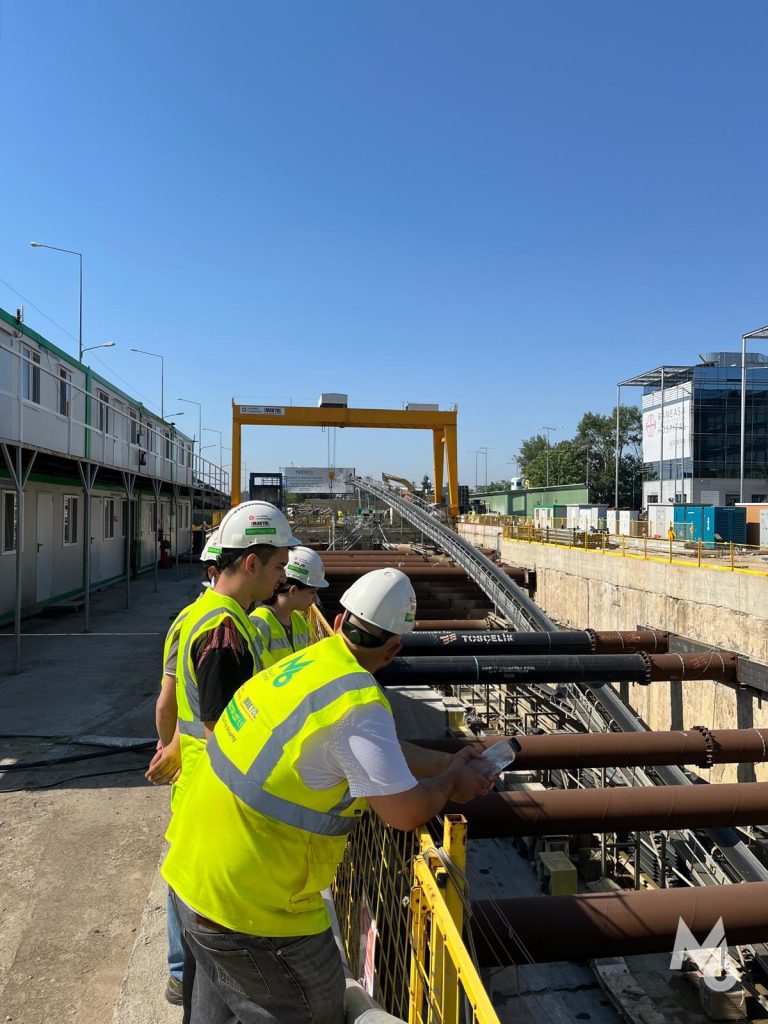
Third-year students from the Technical University of Civil Engineering Bucharest – Faculty of Railways, Roads and Bridges took part last week in a work training internship organised within the M6 Metro Line project, at the initiative of the Ministry of Transport and Infrastructure, in partnership with Metrorex.
During the programme, the future engineers had the opportunity to understand how a complex metro infrastructure project is implemented, through meetings with the contractor’s specialists in fields such as design, topography, surveying, planning, quality management and occupational safety. The activities gave them a practical perspective on the stages and responsibilities involved in building a metro line.
The programme also included technical presentations on the construction processes and on the use of the TBMs “Sfânta Maria” and “Sfânta Ana”, which are excavating the tunnels of M6 Metro Line. Through direct contact with the professionals involved in the project, the students had the chance to understand the challenges and the technologies specific to building metro transport infrastructure.
Initiatives of this kind help train future specialists and strengthen the collaboration between academic environment, the public authorities and the construction sector, giving students a concrete picture of the profession they are to embrace.
In the coming period, extreme temperatures and weather conditions will require special measures to be taken for work on construction sites, whether due to a heatwave or instability of the weather. For this reason, visits and other activities that involve access to the working area by people outside the construction teams will be temporarily suspended and will resume when conditions allow them to take place in complete safety.
M6 Metro Line will create the first direct metro link between Gara de Nord and Henri Coandă International Airport. The new line will have 14.2 km of double track and 12 stations, contributing to the development of urban mobility and to the integration of rail, road and air transport.













No Comments yet!